BRJ Medical
Why does the oxygen therapy mask keep fogging up? This common question often appears during home treatment, hospital care, and overnight oxygen use. The answer usually involves condensation, not a failing oxygen supply. Warm, moist breath touches the cooler inside surface of the mask. Tiny droplets then form, creating the familiar cloudy film.
The details matter. A cool bedroom, frequent mouth breathing, or a mask pressed closely against the face can increase visible moisture. A loose seal may also direct exhaled air toward the mask window. Small changes can make a noticeable difference. Yet fogging is not always harmless or simple. Heavy moisture may irritate the skin, wet the mask cushion, or obscure visibility. It can also suggest that the mask fit needs professional review.
Do not change the prescribed oxygen flow without qualified medical advice. Higher flow does not automatically solve condensation and may be unsafe for some patients. Instead, check whether the tubing is kinked, the mask is clean, and the equipment matches its instructions. A clinician or respiratory therapist can assess fit, humidification, and breathing patterns. Manufacturer guidance also deserves attention.
The first explanation may be incomplete. Room temperature and device design can change the result. Persistent fogging, water entering the tubing, worsening breathlessness, chest discomfort, or unusual drowsiness requires prompt medical advice. Clear observation helps: note when fogging begins, where droplets collect, and whether symptoms appear. That information supports safer troubleshooting and a more accurate explanation.
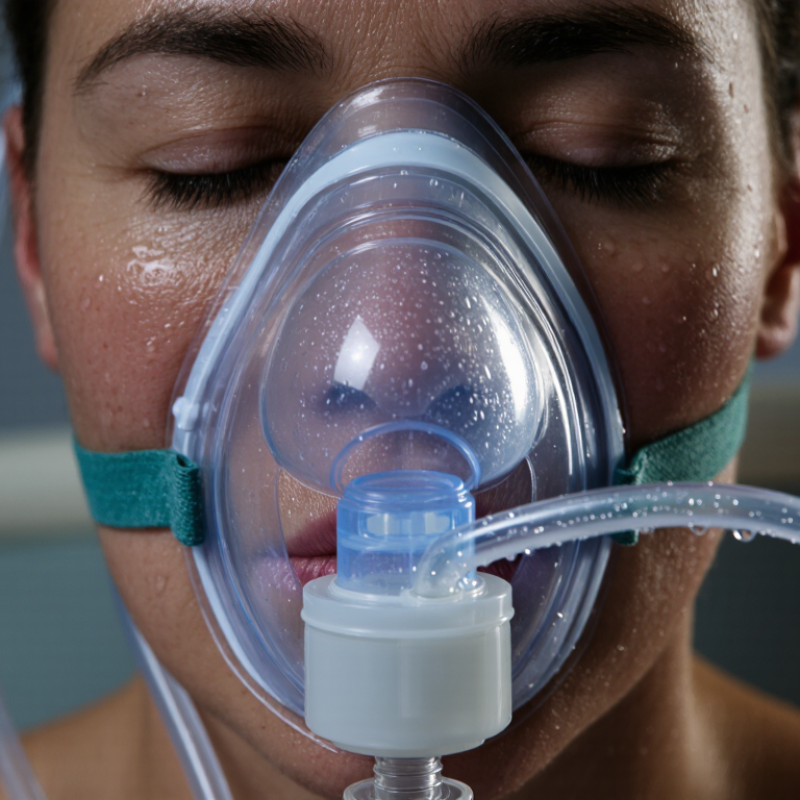
Condensation inside an oxygen therapy mask usually comes from warm, moist breath meeting a cooler mask surface. Each exhaled breath carries water vapor. When that vapor cools, it changes into tiny droplets on the plastic. The effect is more noticeable in cold rooms, during sleep, or when oxygen flow feels cool and dry.
A mask may also fog when its vents are partly covered by bedding, clothing, or an unusual sleeping position. Poor fit can trap exhaled air around the nose and mouth. A humidifier, if used with the prescribed setup, can increase moisture and make droplets more visible. In some cases, the tubing collects water first, then sends it toward the mask. This is often called rainout.
Check the mask, vents, and tubing each day. Keep the vents clear, and place tubing where it will not form low loops that collect water. Dry visible moisture with a clean, lint-free cloth, following the equipment instructions. Do not block vents or change oxygen flow without medical guidance. If water reaches the mouth, breathing feels harder, or fogging suddenly becomes severe, contact a qualified healthcare professional. I once assumed that more moisture always meant better comfort; that assumption was incomplete. Excess moisture can irritate skin, disturb sleep, and signal a temperature or setup problem rather than a simple cleaning issue.
An oxygen therapy mask fogs when warm, moist exhaled air meets a cooler mask surface.
ASHRAE’s Handbook—Fundamentals reports that exhaled air leaves the airway near 34°C and approaches 100% relative humidity. When this air cools below its dew point, water vapor becomes tiny droplets. They appear as mist on the mask.
Room temperature makes the effect more visible. A cool bedroom, cold oxygen tubing, or airflow from a fan can lower the mask temperature quickly. The World Health Organization’s oxygen therapy specifications also recognize humidity management as important for patient comfort and effective oxygen delivery. Fogging is usually harmless, but heavy moisture can obstruct visibility or collect near the cushion. The simple explanation is useful, but incomplete. Fit, breathing pattern, and room humidity also matter.
Tips: Keep the mask gently fitted, not tightly pressed. Wipe moisture with clean, dry gauze when needed. Avoid covering vents or changing the prescribed oxygen flow. A heated humidifier may increase moisture, so use it only under clinical guidance. Inspect the mask and tubing regularly. Small leaks can draw in cool room air and worsen condensation. If water repeatedly pools inside, ask a respiratory professional to check the setup. Personal observation helps, but it should not replace equipment guidance or clinical assessment.
A fogged oxygen mask often reflects normal breathing, not a treatment failure. Warm, moist breath touches the cooler plastic surface and forms tiny droplets. This is the same effect seen on a bathroom mirror. Fogging may appear more often in a cool room or during deeper breathing. Added humidification can also increase visible moisture.
Look closely at the pattern. Light mist that clears between breaths usually suggests that air is moving through the mask. The mask should feel comfortable, and breathing should remain steady. A little moisture is common. It is not automatically dangerous.
Still, fogging deserves careful attention. A loose fit, blocked openings, or excess water can reduce comfort and interfere with airflow. Do not change the prescribed oxygen flow without professional advice. Avoid covering ventilation holes or pushing tissue inside the mask. Wipe the outside gently when needed, and follow the equipment cleaning instructions.
The easy explanation is not always complete. Persistent wetness, bubbling sounds, worsening breathlessness, blue lips, confusion, or unusual drowsiness need prompt medical attention. Contact a clinician if the mask stays soaked or the oxygen system behaves differently. A healthcare professional can check the tubing, humidifier, fit, and prescribed settings.
Why does an oxygen therapy mask keep fogging up? Usually, warm, moist exhaled air meets the cooler mask surface. Condensation then forms as tiny droplets. A close-fitting mask may fog more, especially in a cold room or during sleep. Fogging does not automatically mean oxygen is blocked, but it deserves attention. Never lower the prescribed flow to clear the view.
Tips: Keep the mask vents uncovered and check that the tubing is not kinked. Wipe the inside with a clean, dry cloth when instructed by a clinician. A better fit may reduce leaks and moisture buildup. If prescribed, a compatible humidification setup can help, but adjustments should come from a healthcare professional. Do not add tissue, cotton, or homemade covers inside the mask. They can obstruct airflow or shed fibers.
In practice, placing the tubing where it stays slightly warmer may reduce condensation in some rooms. Keep the mask away from open windows and direct fans. Clean and dry the equipment according to its instructions. I have seen people tighten masks too much, hoping to stop fogging; that can cause pressure marks and discomfort instead. The better question is whether breathing feels easy and oxygen readings remain within the care team’s target. Persistent heavy fogging, water entering the airway, worsening breathlessness, chest pain, or confusion requires prompt medical advice.
Fogging occurs when warm, moisture-rich exhaled air contacts a cooler mask surface. The chart shows the saturation water-vapor pressure at different temperatures; warmer air can hold substantially more moisture, increasing condensation when it cools inside the mask.
How to reduce fogging without blocking oxygen flow:
Reference values are approximate saturation water-vapor pressures based on standard water-vapor data.
Warm, damp exhaled air commonly creates fog inside an oxygen therapy mask. It is often visible around the nose and mouth, especially in a cool room. A loose fit can increase condensation. So can high humidity, mouth breathing, or prolonged use. Wipe the mask gently with clean, dry material. Never block the vents or insert tissue inside the mask. Do not change the oxygen flow without clinical advice.
Persistent fogging deserves closer attention when breathing feels harder. Watch for chest tightness, bluish lips, unusual sleepiness, confusion, or a mask filling with water. These signs may indicate inadequate oxygen delivery, airway obstruction, or equipment problems. Remove pooled moisture safely and contact a healthcare professional promptly. Seek urgent medical help for severe breathlessness, fainting, or rapidly worsening symptoms.
A pulse oximeter may provide useful information, but readings need context. The World Health Organization identifies oxygen saturation below 90% as a critical level requiring assessment in many clinical settings. The British Thoracic Society generally recommends 94–98% for acutely ill adults, while some patients with chronic carbon dioxide retention require 88–92%. These targets are not interchangeable. A cold finger, poor circulation, movement, or nail covering can produce misleading readings. That is an easy detail to overlook. Persistent fogging alone is not always dangerous, but fogging with falling readings or new symptoms should never be dismissed.
Warm, moist breath touches the cooler plastic surface. Tiny droplets form, like on a bathroom mirror. Cool rooms can worsen it.
Not automatically. Light mist that clears between breaths often shows air movement. Breathing should still feel steady and comfortable.
Mild moisture is common during deeper breathing, sleep, mouth breathing, or added humidification. Fogging alone is not the whole story.
Keep ventilation holes open. Check for kinked tubing. Keep the mask away from open windows and direct fans.
No. Tissue, cotton, or homemade covers can block airflow and shed fibers. Never cover the vents.
No. Keep the prescribed setting unless a healthcare professional changes it. Clearing the view is not worth reducing treatment.
Yes. A loose fit can increase leaks and moisture. Tightening it too much may cause pressure marks and discomfort.
Seek prompt advice if the mask stays soaked, water enters the airway, or breathing becomes harder. Chest pain, blue lips, confusion, fainting, or severe breathlessness need urgent help.
It may help, but readings need context. Cold fingers, movement, poor circulation, or nail coverings can mislead. A falling reading with new symptoms should not be dismissed.
Wipe it gently with clean, dry material when instructed. Follow the equipment instructions. Do not improvise with household covers or unapproved parts.
Why does the oxygen therapy mask keep fogging up? Fogging usually occurs when warm, moist breath meets the cooler inner surface of the mask, causing condensation. Temperature differences, high humidity, deep breathing, and extended oxygen use can all make the moisture more noticeable. In many cases, light or occasional fogging is a normal part of oxygen therapy and does not mean the equipment is failing or that oxygen delivery has stopped.
To reduce fogging, keep the mask positioned comfortably and ensure that vents and tubing remain clear. Wiping away moisture carefully, improving room ventilation, or using a suitable humidification setting may help, but never block the mask openings or alter the oxygen flow without professional guidance. Persistent or severe fogging, pooled water, breathing difficulty, unusual discomfort, or signs that oxygen is not reaching you should be taken seriously. Contact a healthcare professional to check the mask, tubing, oxygen settings, and overall treatment plan.
