Understanding urological catheters is crucial for healthcare professionals. The question, "What are the differences between a Foley and a Nelaton catheter?" often arises in clinical settings. Dr. Emily Carter, a leading urologist, points out, "Choosing the right catheter can significantly impact patient comfort and care."
Foley catheters are designed for long-term use. They have a balloon that holds them in place within the bladder. This makes them suitable for patients requiring extended drainage. Conversely, Nelaton catheters are straight and meant for intermittent use. They are typically used for short-term bladder emptying.
Both types serve vital roles in urological procedures. However, their specific applications may vary based on patient needs. It's essential for clinicians to recognize these differences. Misunderstanding can lead to complications. Thus, awareness of these distinctions is key to effective patient management. By understanding their individual characteristics, healthcare providers can make informed decisions that enhance patient safety and comfort.
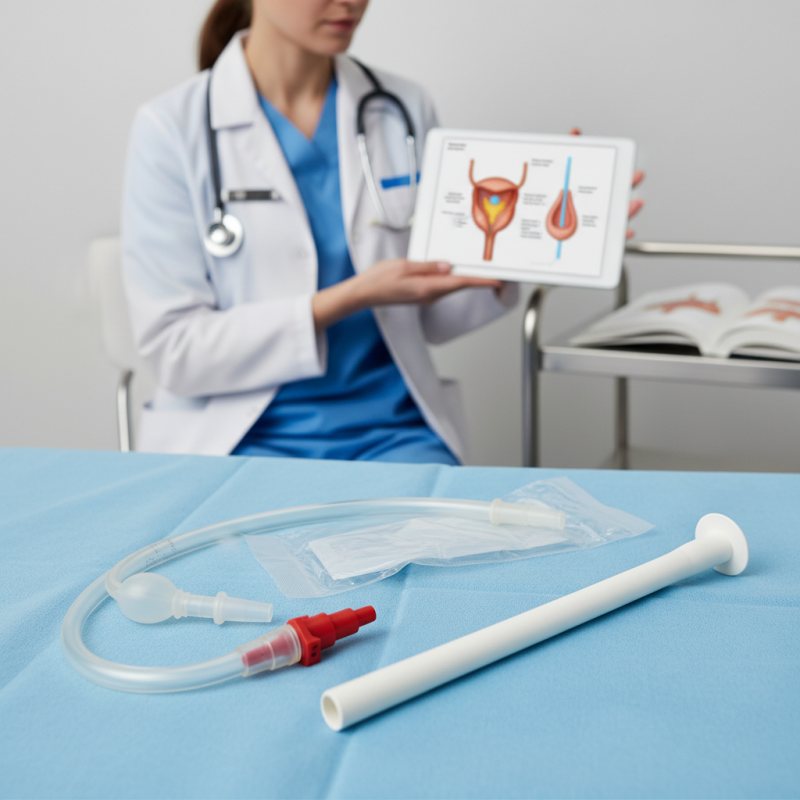
Differences in Design: Foley vs. Nelaton Catheters
Foley and Nelaton catheters differ significantly in design and use. Foley catheters are designed with an inflatable balloon near the tip. This balloon holds the catheter in place in the bladder, making it suitable for long-term use. A report by the American Urological Association indicates that Foley catheters can remain in place for weeks, reducing the need for frequent changes.
Nelaton catheters, on the other hand, are typically used for short-term drainage. They lack an inflatable balloon, making them easier to insert and remove. According to a study published in the Journal of Urology, Nelaton catheters are often recommended for patients requiring intermittent catheterization. Their design allows for a quick procedure, ideal for patients who cannot retain a catheter long-term.
Tips: Always ensure proper sanitation when handling catheters to prevent urinary tract infections. Consider using a catheter introduction kit for each procedure. Consult a healthcare professional to understand which type suits your specific medical needs, as both catheter types have unique benefits and potential complications.
Indications for Use: When to Choose Foley or Nelaton Catheters
Foley catheters are often used in patients requiring long-term urinary drainage.
They can remain in place for several weeks and are ideal for post-operative care or individuals with urinary retention.
In contrast, Nelaton catheters are meant for shorter use, typically for intermittent catheterization.
They help in situations where quick and temporary bladder drainage is necessary, like during diagnostic procedures.
When deciding which catheter to use, consider the patient's condition. For instance, a Foley catheter may be preferable for those with severe mobility issues.
However, for someone who is able to self-catheterize, a Nelaton catheter could be more appropriate. Always assess the patient’s overall health and specific needs before making a choice.
Tip: Always follow sterile techniques when inserting any catheter.
This helps avoid infections. It is crucial to educate patients on proper hygiene, especially if they will handle catheters themselves.
Additionally, be mindful of the potential discomfort associated with catheterization, and communicate openly with patients about their experience.
Comparison of Material and Comfort Between Foley and Nelaton Catheters
When comparing Foley and Nelaton catheters, the material used plays a crucial role in patient comfort. Foley catheters are typically made of silicone or latex. These materials provide flexibility and resilience, which can enhance user experience. A study published in the Journal of Urology highlighted that silicone catheters often reduce irritation, making them favorable for long-term use. In contrast, Nelaton catheters, usually crafted from PVC, are less flexible. This rigidity may cause discomfort with longer insertion times.
Comfort with catheters also hinges on design elements. Foley catheters come equipped with a balloon that helps secure the device in place, reducing the need for repositioning. This feature may lead to increased comfort for individuals requiring extended catheterization. However, many users report increased pressure and discomfort from the balloon, particularly in sensitive patients. The Nelaton type, which lacks a balloon, simplifies insertion. But, it may lead to frequent adjustments, possibly causing discomfort.
In medical settings, the choice of catheter can depend heavily on patient needs. In some instances, patients prefer the ease of insertion offered by Nelaton catheters. Yet, they may experience more frequent complications, such as blockage or leakage. Understanding these nuances can guide healthcare providers in making informed decisions that prioritize patient comfort and care effectiveness.
Clinical Outcomes: Effectiveness and Risks of Foley vs. Nelaton Catheters
Foley and Nelaton catheters serve distinct roles in patient care. Understanding their clinical outcomes is crucial for healthcare providers. Foley catheters are often used for long-term catheterization. They can stay in place for days to weeks. Their effectiveness lies in continuous urine drainage. However, they pose a higher risk of urinary tract infections (UTIs). Continuous presence in the bladder creates a pathway for bacteria.
Nelaton catheters, in contrast, are designed for short-term use. They are typically used for intermittent catheterization. The risk of infection is lower with Nelaton catheters. They are removed after each use, minimizing exposure. However, improper use can still lead to complications. The need for regular replacements adds to patient discomfort.
**Tips:** Always use sterile techniques during catheter insertion. Educate patients about catheter maintenance. Monitor for signs of infection closely. Remember, not all patients will react the same way to catheters. Personal experience with both types can guide your choices but always adhere to best practices. Keeping a close eye on patient feedback is critical. It helps refine the approach toward catheterization.
Differences in Clinical Outcomes: Foley vs. Nelaton Catheters
This chart illustrates the effectiveness and risks associated with Foley and Nelaton catheters based on various clinical outcomes.
Financial Considerations: Cost Differences of Foley and Nelaton Catheters
When considering Foley and Nelaton catheters, the financial aspects become important. Cost varies significantly between these two types. Foley catheters typically have a higher initial expense. They are designed for long-term use, which can lead to increased overall costs. On the other hand, Nelaton catheters are often less expensive. They are meant for short-term or intermittent use, making them more budget-friendly for specific situations.
Healthcare providers should weigh these costs against their patient needs. Foley catheters offer continuous drainage and can reduce the need for frequent replacements. However, their higher price tag may not be justified if the patient is only requiring brief catheterization. Nelaton catheters, despite their lower cost, might necessitate more frequent changes, potentially impacting total expenses. Choosing the right catheter is a delicate balance of financial and medical considerations.
Understanding the nuances of these choices is vital for healthcare systems. Some institutions may opt for one over the other based purely on cost. In the end, it is essential to reflect on how these decisions affect patient care and budgeting. Each choice carries implications that demand careful thought and evaluation.
Differences Between Foley and Nelaton Catheters Explained? - Financial Considerations: Cost Differences of Foley and Nelaton Catheters
| Catheter Type |
Common Uses |
Cost per Unit (USD) |
Material |
Average Duration of Use |
| Foley Catheter |
Long-term drainage, post-operative care |
$1.50 |
Latex or Silicone |
7-30 days |
| Nelaton Catheter |
Short-term drainage, intermittent use |
$0.80 |
PVC or Silicone |
1-48 hours |
FAQS
: Foley catheters have an inflatable balloon for long-term use, while Nelaton catheters are designed for short-term drainage.
A Foley catheter can stay in place for weeks, reducing the frequency of changes.
Nelaton catheters are easier to insert and remove, making them suitable for short-term use.
Foley catheters can increase the risk of urinary tract infections due to their continuous presence in the bladder.
Always ensure proper sanitation and consider using a catheter introduction kit for each use.
Regularly watch for signs of infection and discomfort, as improper use can lead to complications.
Yes, individual experiences can guide choices, but it's important to adhere to best practices.
Both require sterile techniques during insertion to prevent infections.
No, not all patients will react the same way to either type of catheter.
Feedback helps refine approaches to catheterization and improves patient care.
Conclusion
When exploring the question, "What are the differences between a Foley and a Nelaton catheter?" it is essential to consider several factors. Foley catheters are typically designed with a balloon that helps keep them securely in place within the bladder, making them suitable for long-term use. In contrast, Nelaton catheters are more straightforward in design, lacking a balloon, and are often utilized for short-term drainage.
Indications for use vary significantly; Foley catheters are chosen for patients requiring prolonged catheterization, while Nelaton catheters are preferred for intermittent catheterization. Additionally, material composition and patient comfort can differ, influencing the choice between the two types. Clinical outcomes and associated risks also warrant careful evaluation, as each catheter type has distinct effectiveness and potential complications. Lastly, financial considerations highlight cost differences, which can impact decision-making in clinical settings. Overall, selecting the appropriate catheter depends on individual patient needs and clinical circumstances.
 BRJ Medical
