BRJ Medical
Choosing between sterile and non-sterile bandages from China requires more than comparing prices. The correct option depends on wound condition, clinical use, packaging requirements, and your distribution market. A sterile bandage is intended for direct application to an open wound. A non-sterile bandage may suit minor injuries, cosmetic covering, or use over intact skin. The label alone cannot prove product quality.
How to differentiate between sterile and non-sterile bandages? Check the packaging language, sterility claim, lot number, expiration date, and sterilization method. Reliable suppliers should provide product specifications, test reports, certificates, and traceable production records. Ask whether sterilization applies to the complete product or only selected components. Examine sealed pouches closely. A damaged seal can compromise sterility.
China has many experienced medical dressing manufacturers, but supplier capability varies widely. A factory may show attractive samples yet provide weaker documentation later. That happened to some buyers who focused only on unit cost. Do not repeat that mistake. Request pre-production samples and inspect absorbency, adhesive strength, backing material, and package integrity. For sterile products, independent testing and batch verification can add confidence. Local regulatory expectations also matter, so confirm requirements with a qualified compliance professional before importing or selling.
Practical sourcing is rarely perfect. Certificates may be genuine but outdated. English translations may be unclear. Product names can also hide important differences. Keep written specifications, approve artwork carefully, and record every quality requirement. A careful decision protects users, reduces returns, and supports a more dependable China sourcing strategy.
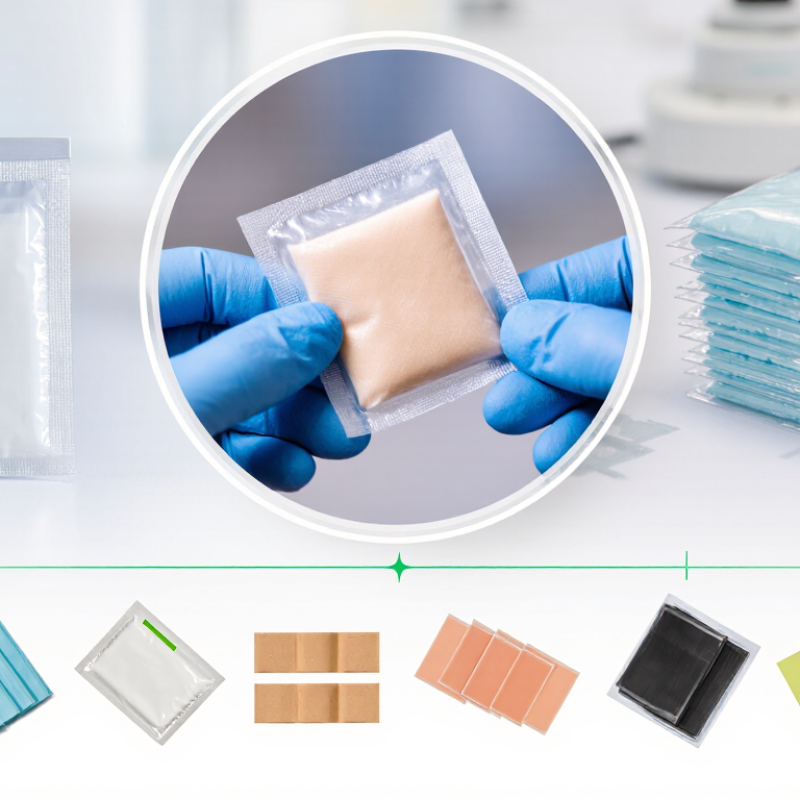
Sterile and non-sterile bandages are not interchangeable products. Sterile bandages are processed to remove viable microorganisms and sealed individually. Their packaging should show a sterilization method, lot number, and expiry date. The seal must remain intact. A damaged pouch removes confidence in sterility.
Non-sterile bandages are manufactured under controlled, hygienic conditions but are not sterilized after production. They can suit minor cuts, abrasions, and general first-aid use when clinical sterility is unnecessary. Non-sterile does not mean dirty. However, it should not be placed on surgical sites, deep wounds, or patients needing strict infection control. That distinction is often misunderstood.
When sourcing from China, buyers should ask for product specifications, material details, inspection records, and quality-system certificates. Request samples before placing a large order. Check whether the adhesive holds on clean, dry skin and whether the pad stays centered during movement. The package should open without tearing the dressing. Small details matter. I have seen clean-looking packaging create false confidence. A supplier’s certificate alone may not answer every practical question. Independent testing can reveal packaging leaks, weak seals, or inconsistent absorbency. Compare the intended use, not only the unit price. A sterile dressing usually requires tighter packaging control and more documentation. A non-sterile option may be suitable for routine care, but only when its limitations are clearly understood.
When Should You Choose Sterile Bandages?
Choose sterile bandages when a wound has broken skin or may contact blood. They are designed for cuts, abrasions, surgical incisions, and fresh burns. Sterile packaging reduces exposure to microorganisms before application. This matters most during the first dressing change. Clean hands still matter.
Sterile bandages are also useful for clinics, first-aid stations, and emergency kits. They offer a controlled option when clean conditions are difficult to maintain. However, sterile does not mean suitable for every injury. A small, superficial scrape may need only a clean, non-sterile covering. The wound’s depth, drainage, and contamination should guide the choice.
When sourcing from China, inspect each product specification carefully. Ask the supplier for the sterilization method, batch records, expiry date, and packaging test results. Check whether every unit has an intact seal and clear lot identification. Damaged packaging should be rejected. A reliable supplier should explain storage conditions and traceability without vague promises. One honest point deserves attention: sterile stock costs more and can expire unused. A low price may look attractive, but poor documentation creates greater risk. Review samples under real handling conditions, including opening, adhesion, and removal. Small details can expose weak quality.
The chart shows the generally preferred bandage type for common situations. A value of 1 means the option is generally preferred; 0 means it is usually not the first choice. Sterile dressings are generally preferred for open, fresh, surgical, or clinically treated wounds, while non-sterile bandages are commonly suitable for minor superficial protection when infection risk is low.
Always follow the advice of a qualified healthcare professional, especially for deep wounds, heavy bleeding, burns, animal bites, infected wounds, or wounds in people with diabetes or impaired healing.
Non-sterile bandages are practical for clean, superficial injuries, such as small cuts, grazes, and blisters. They suit homes, offices, schools, and low-risk workplace first-aid kits. They are not sterilized, but they should still be manufactured, sealed, and stored under controlled conditions. The World Health Organization’s Global Health Estimates 2021 reports about 4.4 million injury-related deaths annually, representing nearly 8% of global deaths. Most bandage purchases, however, involve far less serious everyday wounds.
For buyers sourcing from China, check the product’s intended use carefully. Non-sterile adhesive strips can reduce cost and simplify high-volume distribution. They may also provide enough protection for a clean wound after handwashing and gentle cleaning. Look for intact individual packaging, clear lot numbers, absorbent pads, skin-safe adhesive, and documented bioburden controls. Request ISO 13485 certification and batch inspection records. Packaging can look excellent while the adhesive performs poorly.
Sterile bandages are safer for fresh open wounds, surgical sites, deep punctures, burns, or wounds with contamination concerns. People with diabetes, poor circulation, or weakened immunity need professional advice. The CDC’s wound-management guidance emphasizes cleaning wounds and assessing tetanus risk, not simply covering them. Non-sterile is not automatically unsafe. It is simply a narrower choice. In practice, product labels can be vague, and supplier claims may require independent verification. That step is easy to skip. It should not be.
| Decision Dimension | Sterile Bandages | Non-Sterile Bandages | When the Option Is Practical | Key Purchasing Checkpoints from China |
|---|---|---|---|---|
| Intended Use | Designed for direct application to a wound when a controlled level of microbial cleanliness is required. | Suitable for general protection, securing a dressing, covering intact skin, or low-risk first-aid situations where sterility is not required. | Non-sterile is practical for minor cuts, abrasions, temporary protection, sports kits, household use, and applications over an already applied dressing. | Confirm the intended use, wound-contact statement, product classification, and whether the product is marketed as sterile or non-sterile. |
| Direct Contact with an Open Wound | Preferred when the pad or dressing will directly contact a fresh open wound, surgical site, or puncture site. | Should not be assumed suitable for direct contact with an open wound unless the product documentation specifically supports that use. | Choose sterile for wound-contact layers; non-sterile may be used as an outer securing layer when it does not contact the wound. | Check whether the absorbent pad is sterile, whether the adhesive borders are sterile, and whether each unit is individually sealed. |
| Infection-Control Requirement | Provides a validated sterilization claim when the packaging remains intact and the stated shelf life has not expired. | Does not carry a validated sterile claim; manufacturing cleanliness is not equivalent to sterility. | Sterile is the safer selection for clinical, surgical, invasive, or higher-risk wound-care environments. | Request the sterilization method, validation summary, sterility assurance information, and lot-release documentation where applicable. |
| Typical Sterilization Methods | Common methods include ethylene oxide, radiation, or moist heat, depending on the material and product design. | No sterilization cycle is claimed for the finished product; the product may be supplied clean but not sterile. | For heat-sensitive adhesive products, ethylene oxide or radiation may be more suitable than moist heat. | Ask how sterilization affects adhesive strength, absorbency, discoloration, packaging integrity, and residual limits. |
| Packaging Format | Usually individually wrapped or sealed in a validated sterile barrier system. | May be supplied in bulk packs, dispenser boxes, rolls, or individual non-sterile packets. | Non-sterile bulk packaging is practical for high-volume general use where individual sterile presentation is unnecessary. | Evaluate seal strength, puncture resistance, moisture protection, opening method, traceability, and packaging compatibility with sterilization. |
| Shelf Life and Storage | Typically carries an expiry date linked to maintenance of sterility, packaging integrity, and product performance. | Still requires a stated shelf life, particularly because adhesives, backing materials, and absorbent layers can age. | Non-sterile products can reduce expiry-related waste when stored correctly and used for routine, lower-risk applications. | Request real-time or accelerated aging data, storage temperature limits, humidity requirements, and the recommended stock-rotation method. |
| Cost Structure | Usually has a higher unit cost because of sterilization, sterile-barrier packaging, validation, testing, and additional quality controls. | Generally has a lower unit cost because it does not require finished-product sterilization or sterile packaging. | Non-sterile is practical when purchasing large quantities for first-aid kits, workplaces, schools, retail packs, or dressing-securement tasks. | Compare total landed cost, not only the factory price: packaging, inspection, testing, shipping volume, import duties, and product registration may affect the final cost. |
| Application Environment | Appropriate for hospitals, clinics, treatment rooms, postoperative care, and other settings with defined infection-control procedures. | Appropriate for homes, offices, schools, gyms, warehouses, outdoor activities, and general first-aid supplies when the use is low risk. | Use non-sterile products for external support or protection when clinical protocols do not require sterility. | Match the product specification to the destination market, facility protocol, user training level, and expected wound-care scenario. |
| Material and Skin Compatibility | May use cotton, nonwoven fabric, rayon, polyester, polyethylene film, acrylic adhesive, or silicone adhesive, depending on the design. | Can use similar materials; the key difference is the sterility claim rather than the basic material category. | Either option may be suitable for intact skin if the adhesive, backing, and pad meet the required performance and biocompatibility expectations. | Request material specifications, latex status, adhesive type, skin-sensitivity information, cytotoxicity or biocompatibility documentation where relevant, and performance test results. |
| Absorbency and Protection | Provides wound-contact protection with an absorbent pad when properly selected for the expected amount of exudate. | May provide the same physical absorbency, but the finished product is not presented as sterile. | Non-sterile can be practical as an outer cover, compression aid, or protective layer over a sterile dressing. | Check absorbency capacity, pad release, non-adherence, fluid strike-through, backing breathability, and adhesive performance after application. |
| Quality and Compliance Documentation | Should include documentation covering product specifications, sterile-barrier packaging, sterilization validation, shelf life, and applicable regulatory requirements. | Should include product specifications, manufacturing controls, shelf-life evidence, packaging details, and applicable regulatory documentation, but not a sterile claim. | For either option, documentation should match the exact product, material composition, packaging format, and intended use. | Request a technical file or product dossier, certificate of analysis, test reports, manufacturing quality certificates, labeling artwork, and batch traceability records. |
| Import and Labeling Considerations | Labels normally need to identify sterility, sterilization method where required, lot or batch information, expiry date, and sterile-barrier warnings. | Labels should clearly state that the product is non-sterile and provide intended use, materials, lot information, expiry or manufacturing information, and storage conditions as required. | Non-sterile is practical only when the destination market permits the intended classification and the label does not imply sterility. | Verify destination-country registration, language requirements, symbols, importer information, labeling rules, and whether the product is regulated as a medical device. |
| Recommended Choice | Choose sterile when the bandage directly contacts an open wound, is used after a procedure, or is required by a clinical protocol. | Choose non-sterile when the product is for general protection, dressing fixation, intact skin, or low-risk first-aid use without a sterility requirement. | Use a risk-based decision: wound-contact level, infection risk, user environment, regulatory requirements, packaging needs, and total cost. | Approve a pre-production sample and verify the exact specifications, packaging, labeling, test reports, and production batch before large-scale purchasing. |
Choosing sterile or non sterile bandages starts with the intended use. Sterile products suit open wounds, clinical procedures, and situations requiring controlled microbial conditions. Non sterile bandages may work for general protection, cleaning, or secondary dressing. Do not judge quality from appearance alone. A soft, white pad can still shed fibers or absorb unevenly.
When assessing Chinese suppliers, request exact material details, dimensions, absorbency data, tensile strength, and edge construction. Check whether the supplier controls cotton, rayon, or synthetic fiber quality at incoming inspection. Ask for batch records, product specifications, certificates of analysis, and test reports from qualified laboratories. Sterile products need more evidence, including sterilization method, validated parameters, expiry dating, and package integrity testing. Examine sample packaging closely. Look for clear lot numbers, manufacturing dates, storage conditions, and traceability marks.
A factory audit can reveal practical weaknesses. Watch how workers handle materials, seal packs, and separate rejected goods. Ask to review environmental monitoring and complaint records. A polished sample may hide inconsistent production. No checklist is perfect. I would compare several batches, not one attractive shipment. Even then, small problems can escape inspection, especially with uneven gauze edges or weak seals. Independent pre-shipment testing adds useful confidence before large-volume purchasing.
Choosing sterile or non-sterile bandages from China starts with the application. Sterile bandages suit open wounds and clinical procedures. Non-sterile options may fit minor first-aid use, where controlled sterilization is unnecessary. The label must state the status clearly. A clean-looking pouch proves nothing.
For sterile products, inspect every package sample for intact seals, punctures, moisture, lot numbers, expiration dates, and sterilization information.
Request current certificates, test reports, and declarations matching the exact product. Check whether the supplier follows a recognized quality system, such as ISO 13485, and whether its documents cover your target market.
Packaging artwork deserves attention too. Small errors can create major compliance problems. Confirm instructions, material details, storage conditions, and traceability codes before approval.
Tips:
A reliable supplier should answer technical questions consistently and explain corrective actions clearly.
During one sourcing review, a supplier sent excellent samples but delayed basic batch records. That gap changed the decision.
I also learned that certificates can be genuine yet irrelevant to the specific bandage. Do not rely on a document alone.
Verify scope, validity, product identity, and issuing details. Supplier confidence should come from repeated evidence, not polished promises.
Choose them for broken skin, fresh burns, surgical incisions, or wounds contacting blood. Sterile packaging limits exposure before application. Clean hands remain essential.
No. A minor, superficial scrape may need only a clean non-sterile covering. Wound depth, drainage, and contamination should guide the choice.
They suit small cuts, grazes, blisters, and other clean superficial injuries. They work well in homes, schools, offices, and low-risk first-aid kits.
Request the sterilization method, batch records, expiry date, and packaging test results. Check every seal and lot number. Reject damaged packs.
Check individual packaging, absorbent pads, skin-safe adhesive, lot numbers, and documented bioburden controls. Attractive packaging proves little. Adhesive failure matters.
Test opening, adhesion, removal, absorbency, and edge construction under real handling conditions. A soft white pad may still shed fibers or absorb unevenly.
Ask for product specifications, material details, batch records, inspection reports, and laboratory test results. For sterile items, request validated sterilization and package integrity evidence.
Observe material handling, pack sealing, rejected-goods separation, and environmental monitoring. Review complaint records too. A polished sample can hide inconsistent production.
Yes, especially before large-volume purchasing. Compare several batches, not one attractive shipment. No checklist catches everything, but independent testing adds confidence.
Seek advice for deep punctures, serious burns, contaminated wounds, or surgical sites. People with diabetes, poor circulation, or weakened immunity need extra care.
Choosing between sterile and non-sterile bandages depends on the intended application, wound condition, and required level of protection. Sterile bandages are individually packaged and processed to reduce microbial contamination, making them suitable for open wounds, surgical aftercare, and first-aid situations where hygiene is critical. Non-sterile bandages are generally more practical for covering intact skin, securing dressings, supporting routine care, or use in settings where sterilization is not required. Understanding How to differentiate between sterile and non-sterile bandages? helps buyers select the right product while avoiding unnecessary costs.
When sourcing bandages from Chinese suppliers, evaluate absorbency, softness, adhesive performance, material consistency, and overall construction. Buyers should also review packaging details, batch information, shelf life, storage guidance, and available quality documentation. Reliable suppliers should communicate clearly, provide representative samples, maintain consistent production standards, and support inspections or testing when needed. Careful comparison of product specifications, packaging integrity, compliance records, and supplier responsiveness can help ensure that the selected bandages meet practical and quality expectations.
