BRJ Medical
Choosing between absorbable and nonabsorbable sutures in 2026 is not a simple choice between old and new. The right option depends on the tissue, expected healing time, wound tension, and whether the material should remain in place. Why are some surgical sutures absorbable and others not? The difference reflects their intended role: absorbable sutures gradually break down in the body, while nonabsorbable sutures retain strength longer and may need removal if placed externally. Some are left in the body when clinically appropriate.
Details matter. A small facial wound, a deep layer of tissue, and a high-tension incision do not ask the same thing of a suture. Material, size, coating, and technique can also affect handling and performance. An absorbable option may avoid a later removal visit, but its strength changes over time. A nonabsorbable option may offer lasting support, yet exposed stitches can require follow-up care. Neither category is automatically safer or better.
Sound selection draws on clinical evidence, product instructions, the patient’s needs, and the judgment of a qualified clinician. The healing pattern matters. So does the setting. Even a familiar choice deserves a second look when tissue quality, infection risk, or follow-up access changes. There is no perfect thread for every wound, and that is easy to forget. This guide compares the key trade-offs and practical questions behind suture selection, while recognizing that final decisions belong to the treating clinician.
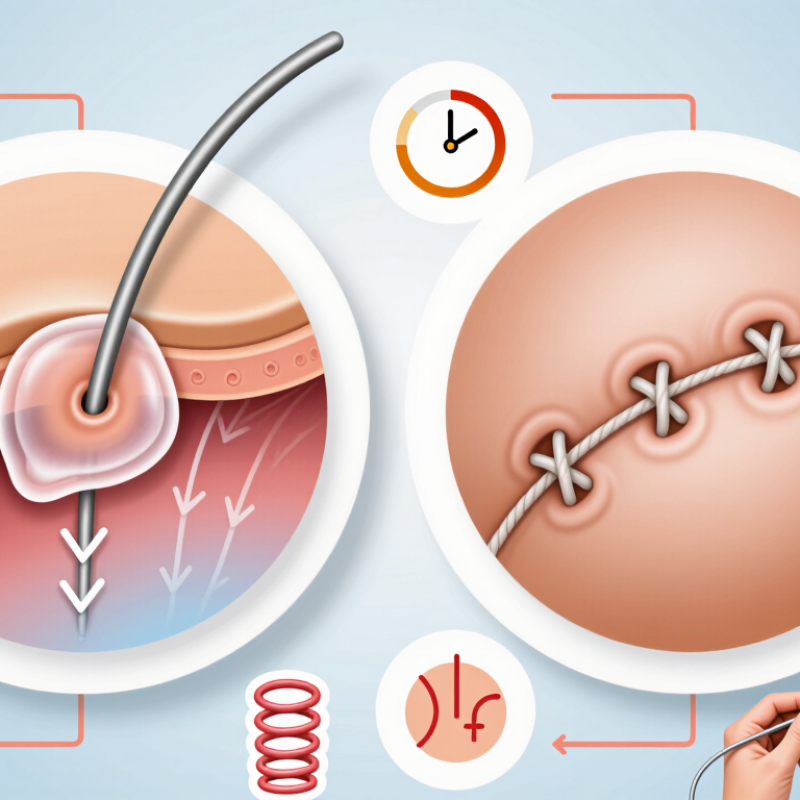
Absorbable sutures are designed to lose strength and break down inside the body over time. The body usually degrades them through hydrolysis or, in some natural materials, enzymatic processes. Synthetic options include polyglycolic acid, polyglactin, poliglecaprone, and polydioxanone. Natural gut sutures are made from collagen-containing tissue and may be absorbed less predictably. That difference matters.
Nonabsorbable sutures are intended to remain in place unless removed or otherwise managed by a clinician. Common materials include nylon, polypropylene, polyester, silk, and stainless steel. Their handling and strength vary: a fine nylon thread feels different from a braided polyester strand, while metal sutures are used for specific surgical needs. “Nonabsorbable” does not always mean unchanged forever; some materials can gradually lose strength or provoke tissue responses.
The categories help, but they are not perfectly tidy. A clinician considers how quickly the tissue heals, how much support it needs, and whether a stitch will be removed. A small skin cut may need a different material from a deep abdominal closure. Material names alone cannot determine the right choice. Technique matters, too. A practical detail sometimes overlooked is that braided threads can hold more fluid than smooth monofilaments, which may influence selection in certain wounds. The best choice depends on the patient, procedure, and professional judgment.
Choosing absorbable or nonabsorbable sutures means balancing how long a wound needs support against how the material behaves in tissue. Absorbable sutures gradually lose strength and break down, but the timeline varies with material, tissue, and local conditions. Nonabsorbable sutures generally retain support longer; exposed skin sutures may require removal, while some buried sutures remain in place. Timing matters. A wound under tension may need prolonged support, while a small, well-aligned incision may not. The visible stitch is only part of the decision.
Tissue response also differs. Every suture can trigger some inflammation, but the amount depends on its composition, structure, and how it is handled. A rougher or thicker thread may cause more tissue disruption than a fine, smooth one. In delicate areas, such as the face or oral mucosa, clinicians weigh scarring, moisture, and follow-up needs alongside strength. Not always an easy call. Patient healing, blood supply, infection risk, and the wound’s location all matter. A tidy knot does not guarantee a sound choice. Clinicians should match the suture to the tissue and expected healing period, then follow current clinical guidance and the product’s instructions.
| Decision Factor | Absorbable Sutures | Nonabsorbable Sutures | Practical Selection Guide |
|---|---|---|---|
| What happens over time? | They lose tensile strength and are eventually broken down or absorbed by the body. Synthetic absorbables are generally degraded by hydrolysis; natural gut sutures are broken down mainly by enzymatic processes. | They are intended to remain in the body long term. Some materials, such as silk, can gradually lose strength or degrade, so “nonabsorbable” does not mean every material is completely unchanged forever. | Choose absorbable material when the wound can rely on healing tissue after the suture’s support is no longer needed. Choose nonabsorbable material when prolonged support or later removal is appropriate. |
| Examples of materials | Plain or chromic gut; synthetic materials such as polyglactin 910, poliglecaprone 25, and polydioxanone. | Polypropylene, nylon, polyester, silk, and stainless steel. | Material choice matters: two sutures in the same broad category can differ substantially in handling, strength retention, and tissue response. |
| Typical support duration | Varies by material. Fast-absorbing gut may provide useful support for about 5–7 days; polyglactin 910 commonly retains useful strength for a few weeks; polydioxanone retains strength longer, often for several weeks. | Usually provides support for as long as it remains intact and in place. Long-term performance depends on the material, location, loading, and tissue environment. | Match the expected strength-retention period to the healing timeline and mechanical demands of the tissue. These are general ranges, not patient-specific guarantees. |
| Approximate absorption or persistence | Absorption time is material-specific. Examples include roughly 60 days for plain gut, around 56–70 days for polyglactin 910, about 90–120 days for poliglecaprone 25, and around 180–210 days for polydioxanone. | Typically remains unless removed or otherwise disrupted. Nylon and polypropylene are commonly used when long-term persistence is desired. | Do not use absorption time as a substitute for strength-retention data: a suture may lose most of its strength well before it is fully absorbed. |
| Strength and handling | Strength declines over time. Monofilament synthetics often have less capillarity than braided materials; natural gut can have less predictable strength retention and may be affected by tissue conditions. | Generally maintains support longer. Monofilaments such as nylon and polypropylene have a smooth single strand; braided materials such as polyester and silk can offer handling characteristics that differ from monofilaments. | Consider tissue tension, knot security, suture size, and whether the wound needs temporary or lasting support. Follow the instructions for use for the specific suture. |
| Tissue response | All sutures cause some local foreign-body response. Natural gut generally produces more variable inflammatory response than many synthetic absorbable materials; hydrolysis-based synthetic sutures tend to have a more predictable breakdown process. | Response varies by material and construction. Silk may elicit more tissue reaction than many synthetic monofilaments; material choice and contamination risk also affect clinical response. | For tissue sensitivity or situations where minimizing tissue reaction is a priority, clinicians may consider an appropriate synthetic monofilament, while weighing handling and clinical requirements. |
| Typical use considerations | Often considered for buried or internal closures, and for wounds where suture removal would be difficult or unnecessary. The selected absorption profile should suit the tissue’s healing needs. | Often considered when prolonged support is needed or when accessible skin sutures are planned for later removal. Some nonabsorbable sutures are also used for long-term internal support. | Use depends on the procedure, tissue type, wound tension, infection risk, and clinician preference—not on the absorbable/nonabsorbable label alone. |
| Removal and follow-up | Usually does not require routine removal, although exposed or irritating ends may need clinical assessment. | Skin sutures generally require removal at a clinician-determined time; timing varies with anatomical site and healing. Internal sutures are not necessarily removed. | Patients should follow the treating clinician’s wound-care and follow-up instructions and should not remove sutures themselves unless specifically advised. |
Clinical note: Timelines are approximate and vary with suture formulation, size, tissue location, patient factors, and clinical conditions. Suture selection should be made by a qualified clinician for the specific procedure.
How to Choose Absorbable or Nonabsorbable Sutures in 2026?
Factors That Influence Suture Selection
Suture choice depends on the tissue, wound location, and expected healing time. Absorbable sutures gradually lose strength and break down, making them useful for deeper layers that do not need later removal. Their absorption rates differ, though. A fast-healing area may need different support from a slow-healing one. Nonabsorbable sutures remain intact longer and may suit wounds needing lasting support or skin closure where removal is planned. The decision is not simply about convenience.
Tissue tension matters. A moving joint, for example, puts different demands on a closure than a small facial cut. Clinicians also consider infection risk, patient health, allergies, scar concerns, and whether follow-up for removal is realistic. Suture thickness and needle type count, too. These details can be easy to miss when focusing only on absorbable versus nonabsorbable. There is no single best option for every wound; the treating professional should weigh the full picture.
Tips: Ask what the suture is expected to do and when it may need removal. Follow wound-care instructions, and seek medical advice for spreading redness, worsening pain, fever, or drainage. Healing can be uneven. That deserves attention.
How to Choose Absorbable or Nonabsorbable Sutures in 2026?
Matching Suture Types to Wound and Procedure Requirements
Suture choice should match the tissue, healing time, wound tension, and follow-up plan. Absorbable material is commonly used beneath the skin, in mucosa, and in deeper layers that need temporary support. Its breakdown rate matters: support must last long enough for healing, but not unnecessarily long. Small details matter.
For external skin closure, nonabsorbable sutures can provide dependable support when tension is significant. They require planned removal, so consider access to follow-up care and the wound’s location. Absorbable skin sutures may suit selected wounds or patients for whom removal is difficult. The trade-off is that material, placement, and tissue response still matter. Not always obvious.
Evidence does not support a one-size-fits-all rule. A Cochrane review of 19 randomized trials involving 3,487 participants found no clear overall advantage for absorbable or nonabsorbable sutures in skin-closure outcomes. The studies varied in procedures and methods, so those results cannot settle every case. In practice, clinicians also weigh contamination risk, tissue fragility, expected healing, and the need for precise edge alignment. A quick glance at the wound is not enough; the procedure and patient matter, too.
Typical time to complete absorption of selected absorbable suture materials
Absorption time is approximate and varies with material, formulation, and tissue conditions. Match the expected support period to the wound’s healing timeline and tension. Nonabsorbable sutures are not absorbed; depending on the site and procedure, they may be removed or left in place. Follow clinical judgment and applicable procedural guidance.
Choosing between absorbable and nonabsorbable sutures starts with the wound, but postoperative planning matters just as much. Skin over a joint faces repeated tension. A small facial incision may need a different approach. Clinicians also consider tissue type, healing speed, infection risk, and whether follow-up is practical. No single material fits every patient.
Absorbable sutures gradually break down, so removal is usually unnecessary. Still, no removal does not mean no care. Follow the clinician’s cleaning instructions, and avoid pulling at the thread. Watch for spreading redness, worsening pain, fever, or unusual drainage; contact a healthcare professional if these occur.
Nonabsorbable sutures often require a scheduled removal visit. Put that date somewhere visible. Missed appointments may increase marking or irritation.
Daily routines matter. Can the patient return to the clinic? Is transportation difficult? Will the site meet sweat, work gloves, or a restless child? These details can affect the care plan. Ask who will check the incision and when. Instructions vary by wound and patient. An incision may look settled before it is strong. It is easy to overestimate healing from appearance alone.
Absorbable sutures gradually lose strength and break down. Nonabsorbable sutures generally provide support longer. Timing matters.
They are often used beneath the skin, in mucosa, or in deeper layers needing temporary support. The breakdown rate matters.
They can provide dependable support for external wounds under significant tension. Removal must be planned.
No. The timeline varies with the material, tissue, and local conditions. Healing is not perfectly predictable.
A review of 19 trials found no clear overall advantage. The studies differed, so one rule cannot fit every wound.
Composition, thickness, texture, and handling can matter. Rougher or thicker thread may disrupt tissue more.
In places such as the face or oral mucosa, scarring, moisture, strength, and follow-up needs all matter. Not always obvious.
Nonabsorbable skin sutures may need removal, so access to care and wound location matter. A neat stitch is not proof of a good match.
Choosing between absorbable and nonabsorbable sutures depends on how long a wound needs support and whether stitches should remain in place. Absorbable sutures gradually break down in the body, while nonabsorbable sutures retain their strength for longer and may need removal or remain permanently, depending on the procedure. Why are some surgical sutures absorbable and others not? The choice reflects differences in healing time, required wound support, tissue response, and the practical benefits of avoiding removal.
Selection also depends on the wound’s location, depth, tension, and the procedure being performed, as well as the patient’s health and healing needs. Clinicians consider suture strength, absorption rate, and the likelihood of irritation or other tissue reactions when matching a material to a specific use. Postoperative planning matters too: patients should follow care instructions, monitor the wound for concerning changes, and attend recommended follow-up visits, including suture removal when needed.