 BRJ Medical
BRJ Medical
BRJ Medical
What Are the Benefits of China Best SMS Nonwoven Fabric? This question deserves more than a simple price comparison. In hospitals, fabric performance can affect comfort, workflow, and infection-control practice. SMS nonwoven fabric combines spunbond and meltblown layers. This structure creates a useful balance between strength, softness, and fluid resistance. It is commonly used for surgical gowns, drapes, caps, masks, and protective covers.
What are the benefits of using SMS non-woven fabric in hospitals? The practical answer includes several points. Its outer layers can resist light splashes and reduce contamination transfer. The middle meltblown layer improves barrier protection. The material is lightweight, so staff can move more easily during long procedures. It also allows breathability, which may reduce heat and discomfort around the shoulders and neck. Disposable SMS products can support consistent hygiene routines. They also reduce laundering demands and simplify supply management.
Dr. Charles E. Edmiston Jr., a recognized surgical infection-prevention expert, has stated, “No single intervention will prevent every surgical-site infection.” That reminder matters. SMS fabric is not a magic shield. Its value depends on correct product selection, fit, storage, disposal, and clinical use. China-made SMS fabric may offer strong customization and competitive manufacturing capacity. However, buyers should examine basis weight, hydrostatic pressure, tensile strength, lint levels, sterilization compatibility, and documented quality controls. The cheapest option may fail under pressure. A reliable supplier should provide clear testing records and consistent batch performance. That is where real value begins.
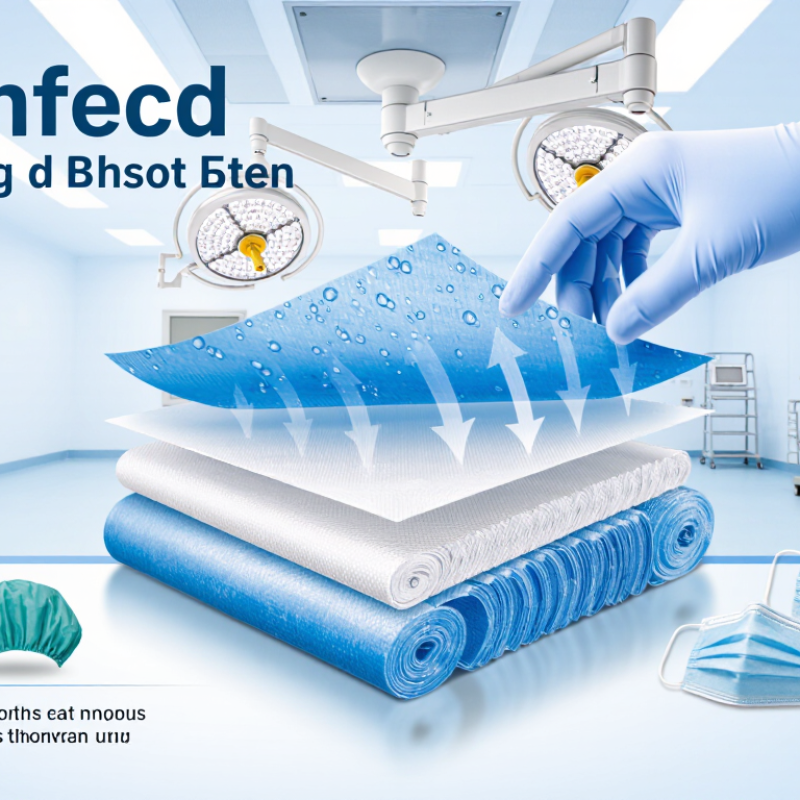
What Are the Benefits of China Best SMS Nonwoven Fabric?
SMS nonwoven fabric uses three functional layers: spunbond, meltblown, and spunbond. The outer spunbond layers provide strength, softness, and better tear resistance. They also help the material keep its shape during handling. The middle meltblown layer contains very fine fibers. It improves filtration and creates a useful barrier against small particles and liquid droplets. This layered structure makes SMS fabric suitable for medical gowns, protective covers, hygiene products, and selected industrial applications.
In practical production, consistent fiber distribution matters greatly. Uneven meltblown coverage can create weak filtration areas. That detail is easy to miss. Reliable manufacturers usually monitor basis weight, tensile strength, hydrostatic pressure, and filtration performance. China-made SMS fabric can offer flexible widths, weight options, and efficient large-scale production. However, “best” depends on the intended use, not only on price or appearance. A softer fabric may sacrifice some strength. A heavier fabric may feel less comfortable.
Tips: Request a technical data sheet and a sample roll. Check the fabric after folding, stretching, and light exposure. Compare both sides by touch. Confirm whether testing matches your application and required regulations. Do not judge performance by whiteness alone. A careful trial can reveal problems before bulk production.
| Layer / Dimension | Typical Material and Structure | Primary Function | Typical Performance Contribution | Practical Benefits | Common Applications |
|---|---|---|---|---|---|
| S Outer Spunbond Layer |
Continuous polypropylene (PP) filaments bonded by thermal calendering or other bonding methods. | Provides surface strength, shape stability, and resistance to handling and abrasion. | Usually contributes most of the tensile strength and tear resistance of the composite fabric. | Improves durability, reduces lint compared with many staple-fiber fabrics, and supports reliable converting into gowns, covers, and packaging. | Medical gowns, protective coveralls, shoe covers, hygiene products, and filtration pre-layers. |
| M Meltblown Filter Layer |
Very fine PP microfibers formed by high-velocity hot air and collected as a nonwoven web. | Creates the main filtration and fine-particle barrier layer. | Fine fibers provide a high surface area; filtration performance depends on basis weight, fiber diameter, web structure, air velocity, and electrostatic treatment. | Enhances particle and aerosol capture while keeping the material relatively lightweight and breathable. | Face-mask filter media, respirators, liquid filtration, air filtration, and absorbent or barrier composites. |
| S Inner Spunbond Layer |
Continuous PP filaments laminated or thermally bonded to the meltblown web. | Protects the meltblown layer and provides a comfortable, stable contact surface. | Helps maintain the integrity of the central filter layer during sewing, folding, transportation, and use. | Reduces direct fiber shedding from the meltblown layer, improves handling, and supports a smoother user-facing surface. | Protective apparel, surgical gowns, masks, drapes, mattress covers, and hygiene products. |
| Composite SMS Structure | Spunbond–Meltblown–Spunbond three-layer polypropylene composite. | Combines mechanical strength, filtration, and barrier properties in one material. | Typical total basis weights commonly range from approximately 10 to 80 g/m², depending on the product design and intended use. | Offers a useful balance of strength, softness, low weight, air permeability, and protection against dry particles and selected liquid splashes. | Healthcare, personal protective equipment, industrial filtration, agriculture, construction, and hygiene manufacturing. |
| Barrier Performance | Multilayer web with a fine meltblown core between two stronger spunbond skins. | Limits the passage of particles and helps resist penetration by selected liquids. | Barrier results vary with basis weight, hydrostatic pressure, pore structure, surface treatment, seams, and the applicable test method. | Supports protection-oriented product designs without requiring a heavy woven fabric. | Isolation gowns, protective clothing, medical packaging, filtration media, and disposable covers. |
| Breathability and Comfort | Porous nonwoven construction with air-permeable spunbond and meltblown layers. | Allows air and water vapor movement while retaining a designed level of particle or liquid resistance. | Air permeability generally decreases as basis weight, compactness, or coating level increases. | Can reduce heat and moisture buildup compared with more impermeable barrier materials. | Disposable apparel, face masks, hygiene components, and lightweight protective products. |
| Manufacturing and Customization | Polypropylene layers can be produced in different basis weights, colors, widths, embossing patterns, and treatments. | Allows the fabric to be tailored for strength, softness, filtration, liquid resistance, or processability. | Performance must be verified using the relevant product standard and test conditions rather than appearance alone. | Enables application-specific designs while retaining the production efficiency associated with nonwoven materials. | Customized medical, hygiene, industrial, agricultural, and packaging products. |
| Material Characteristics | Polypropylene is lightweight, hydrophobic, and commonly used in disposable nonwoven products. | Provides a low-density substrate with useful moisture resistance and chemical resistance in many everyday conditions. | Performance can be affected by heat, ultraviolet exposure, chemicals, sterilization method, and mechanical stress. | Low weight and moisture resistance can help reduce material consumption and improve handling efficiency. | Disposable protective products, filtration media, medical supplies, and industrial applications. |
Note: The stated ranges and performance descriptions are general industry references. Actual SMS nonwoven fabric properties should be confirmed through product specifications and standardized laboratory testing for the intended application.
SMS fabric combines two spunbond layers with a meltblown middle layer. It supports gowns, masks, surgical drapes, and protective covers. The structure balances strength, filtration, and softness.
The meltblown layer captures bacteria-containing aerosols. Fiber diameter, web uniformity, and electrostatic treatment affect performance. Fabric weight alone cannot prove filtration quality. Small gaps matter.
Medical mask materials may require at least 95% bacterial filtration efficiency for Level 1. Levels 2 and 3 generally require at least 98%. Results should identify the test method, sample design, and laboratory conditions.
No. The result describes the tested material under specific conditions. Mask shape, edge sealing, moisture, sterilization, and storage can change performance. The number may sound stronger than the evidence.
Differential pressure indicates how easily air passes through the fabric. A result below 5.0 mmH₂O/cm² suggests relatively low breathing resistance. Lower resistance may reduce heat and moisture buildup during extended wear.
It can, but the two properties are not identical. The meltblown layer supports filtration, while the spunbond layers add strength and handling stability. Airflow, humidity, sample area, and bonding quality influence results.
Medical SMS fabrics often target 20–160 mmH₂O hydrostatic pressure. This range may support limited splash exposure. It does not automatically prove a higher-level surgical barrier. Context matters.
Request repeated test results from multiple production lots. Check units, conditioning, test methods, failure points, and seam performance. Inspect bonding, lint, thickness, and surface uniformity. One impressive sample is not enough.
Yes, sometimes. Higher meltblown density may improve liquid resistance and filtration. It can also increase heat and reduce softness. The balance is imperfect, and the intended use should guide selection.
SMS nonwoven fabric combines three functional layers: spunbond for strength and softness, meltblown for fine-particle and microbial filtration, and a second spunbond layer for durability and handling. What are the benefits of using SMS non-woven fabric in hospitals? Its balanced structure can support reliable protection while remaining comfortable during extended use. Medical-grade materials may achieve 95%–99% bacterial filtration efficiency under ASTM F2100 performance requirements, while maintaining a differential pressure below 5.0 mmH₂O/cm² to promote breathability.
Another important advantage is liquid resistance. Depending on its construction and intended application, medical SMS fabric can target hydrostatic pressure levels from 20 to 160 mmH₂O, helping reduce the passage of fluids. When selecting China-made SMS fabric, buyers should consider a suitable basis weight, commonly ranging from 10 to 60 GSM, as well as applicable standards, testing documentation, and end use. These materials can be adapted for gowns, drapes, masks, covers, and other disposable medical or hygiene products, offering a practical balance of filtration, protection, comfort, and cost efficiency.
