A scraped knuckle, a paper cut, or a small blister can make choosing a dressing feel surprisingly unclear. What is the difference between an adhesive bandage and a gauze pad? An adhesive bandage combines a small absorbent pad with sticky edges, so it can cover and stay on minor wounds. A gauze pad is a separate, absorbent square. It usually needs tape, a wrap, or another method to hold it in place.
The right choice depends on the wound’s size, location, and drainage. A fingertip cut may suit a small adhesive bandage, while a larger scrape may need a gauze pad that covers more skin. Gauze can also be useful when a wound needs frequent dressing changes. But it may shift on a moving joint, and adhesive can irritate sensitive skin. Small details matter.
Wound-healing researcher George D. Winter’s work helped establish the value of a moist wound environment. A practical paraphrase of that principle is: “Keep the wound appropriately moist, not soaked.” This is not a direct quotation. It is a useful reminder that a dressing should protect the area without trapping excess fluid. In the guide ahead, we’ll compare five practical differences, including coverage, comfort, absorption, and ease of use. Neither option fits every wound. Seek professional advice for deep wounds, persistent bleeding, or signs of infection.
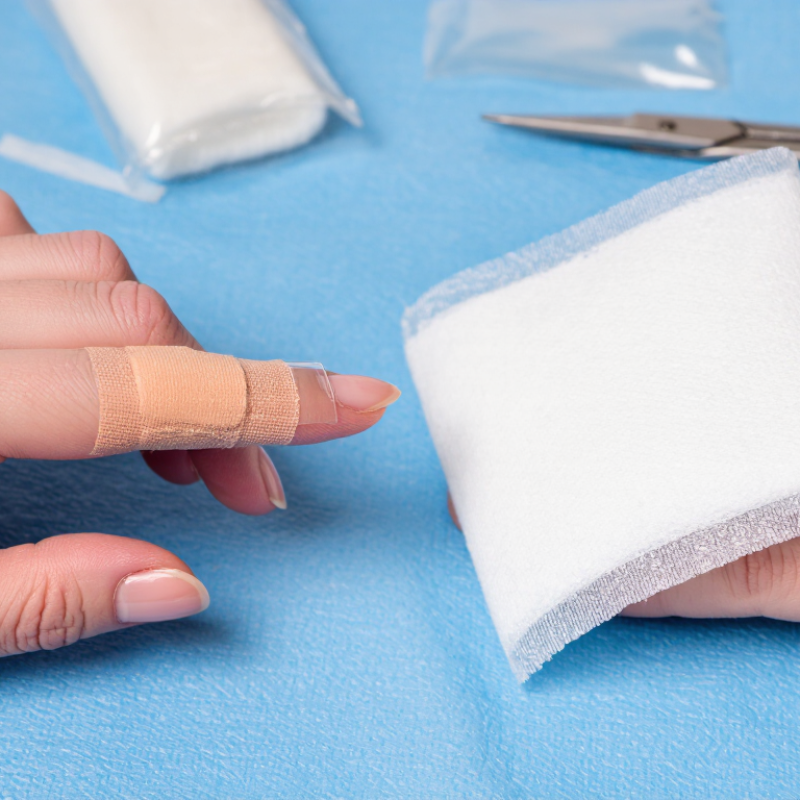
What Are Adhesive Bandages and Gauze Pads?
Adhesive bandages combine a small absorbent pad with sticky edges. They suit minor cuts and scrapes when the pad can cover the injured area without pressing on it. The adhesive helps keep the pad in place during everyday movement. Gauze pads are separate, soft layers of absorbent material. They come in different sizes and are usually secured with medical tape or a wrap. More flexible, but less self-contained.
A gauze pad can cover a wider scrape or help absorb more fluid, though it may shift if loosely secured. Choose a clean pad large enough to cover the wound, and avoid touching the part that will rest against it. Change the dressing if it gets wet or dirty. Small details matter. I used to think the stickier option was always more secure; sweat and movement can prove otherwise.
Tips: For a tiny scrape, an adhesive bandage may be convenient. For a broader area, gauze can offer more coverage. Keep the dressing snug, not tight, and check the skin for irritation. If a wound is deep, won’t stop bleeding, or shows increasing redness or warmth, seek medical advice. A dressing protects the surface; it does not replace care when an injury needs assessment.
How Do Their Materials and Designs Differ?
An adhesive bandage combines several materials in one small dressing. A flexible backing, often fabric or plastic, carries a pressure-sensitive adhesive around a central absorbent pad. The pad may have a non-stick surface, but designs vary. That matters. On a fingertip, its shape can wrap around the skin and stay in place without separate tape. The backing also helps shield a minor scrape from everyday rubbing, though it may feel less breathable on sweaty or sensitive skin.
A gauze pad is usually a separate square or rectangle made from woven or nonwoven fibers, such as cotton or synthetic material. Its open texture lets air pass through and can absorb fluid, while its thickness ranges from a thin layer to a soft, bulky stack. Not always. A gauze pad has no adhesive edge, so tape or a wrap holds it in place; this makes it easier to cover a wider or uneven area. For a wound that may stick to ordinary gauze, a non-adherent contact layer can help reduce pulling during removal. In practice, the best choice depends on the wound’s size, drainage, and location, not just the material label. I sometimes find that small design details, like pad coverage, are easy to overlook.
Which Wounds Suit Each Dressing?
5 Tips on Adhesive Bandage vs Gauze Pad Differences?
Which Wounds Suit Each Dressing?
An adhesive bandage works well for a small, shallow cut with little drainage. Its absorbent pad covers the wound, while the sticky edges hold it in place. Use it on a clean, dry patch of skin, such as a knuckle or heel. For sweaty skin, a bandage may loosen quickly. Real wounds are messier than diagrams.
Tip: Match the pad to the wound. Choose gauze for a larger or irregular area, or when you need to secure a dressing with medical tape. If the wound is weeping, check it often and replace wet or dirty gauze. A non-adherent layer can help prevent the pad from sticking to healing tissue. Don’t pack gauze into a deep wound unless a clinician has advised you to.
Evidence has limits. A Cochrane review of 30 randomized trials involving 2,517 people examined dressings for superficial and partial-thickness burns. It found the evidence was generally low or very low certainty, and it did not directly establish a winner between ordinary adhesive bandages and gauze pads (Wasiak et al., Cochrane Database of Systematic Reviews, 2013, CD002106). So, choose by wound size, drainage, and location—not by assuming one dressing is always better. If a wound is deep, won’t stop bleeding, or shows spreading redness, seek medical care.
How Should Each Option Be Applied and Secured?
Wash your hands and gently rinse the wound with clean running water. Pat the surrounding skin dry; adhesive does not hold well on damp or oily skin. Center the absorbent pad over the wound, keeping the sticky edges off the injured area. Press the wings onto clean, dry skin without stretching them. Not too tight. Replace the bandage if it gets wet, dirty, or loose, and check the skin for redness or itching. Small cuts are often easy to cover, but a deep or persistently bleeding wound needs medical attention.
For a larger area, place a sterile gauze pad over the wound and hold steady pressure if bleeding is present. Secure it with medical tape on the surrounding skin, or use a rolled gauze wrap to keep the pad in place. Overlap each turn slightly, but leave room for comfortable movement. A tidy wrap can still be too tight. Check that fingers or toes beyond the wrap stay warm and normally colored; loosen it if they become cold, numb, or pale. Gauze may shift more than an adhesive bandage, so inspect it after activity and replace it when damp or soiled. I sometimes find the edges need adjusting after movement, even when the dressing looked secure at first.
5 Tips on Adhesive Bandage vs. Gauze Pad: How to Apply and Secure Each Option
| Tip |
Adhesive Bandage |
Gauze Pad |
How to Apply and Secure It |
| 1 |
Best suited to small, shallow cuts and scrapes that can be covered by the central pad. |
Useful for larger or irregular areas, or when a broader absorbent covering is needed. |
Choose a sterile dressing large enough to cover the wound and the surrounding area. For a small wound, center the bandage pad over it; for a larger wound, place a sterile gauze pad over it. |
| 2 |
The adhesive strips hold the pad in place, so separate tape is usually unnecessary. |
A plain gauze pad does not adhere by itself and needs medical tape or a suitable wrap to stay in place. |
Apply adhesive bandage strips to clean, dry skin. Secure gauze at its edges with medical tape, or use a wrap that holds it firmly without restricting circulation. |
| 3 |
Can be difficult to keep in place on very moist, oily, or hairy skin, or over joints that move often. |
Can be positioned and secured over a wider area, but a loose pad may shift or slip. |
Clean and dry the surrounding skin before dressing. On a joint, position the dressing so movement is comfortable; check that tape or a wrap does not pull the skin or feel tight. |
| 4 |
Replace it if it becomes wet, dirty, loose, or saturated with blood. |
Replace it if it becomes wet, dirty, loose, or saturated. If gauze sticks to the wound, moisten it with clean water or saline before removal rather than pulling it off dry. |
Wash your hands before and after changing a dressing. If bleeding continues, apply steady direct pressure with clean gauze or cloth; seek medical care for heavy bleeding or bleeding that will not stop. |
| 5 |
Check the skin around the adhesive for irritation, especially when changing the bandage. |
When a wound needs a non-stick contact layer, use a sterile non-adherent dressing under the gauze rather than placing ordinary gauze directly on a wound that may stick to it. |
After securing either option, make sure it is snug but not constricting. For a wrapped hand or limb, check that the skin beyond the wrap stays warm and normally colored and that there is no new numbness or tingling. |
Basic care: Rinse a minor wound with clean running water and cover it with a clean dressing. Get medical advice for deep or gaping wounds, embedded objects, signs of infection, or wounds that may need a tetanus assessment.
What Are Their Care Needs and Limitations?
An adhesive bandage suits a small, shallow cut with little bleeding. Its pad protects the wound, while sticky edges hold it in place. Clean the area gently with clean water, then dry the surrounding skin before applying it. Replace the bandage daily, or sooner if it gets wet or dirty. Watch for redness, warmth, swelling, worsening pain, or pus. Adhesive can irritate sensitive skin, and a small strip may not stay put on a moving knuckle.
Tips: Use gauze when a wound is larger, oozing, or awkwardly placed. A sterile pad can cover more skin, and gentle pressure may help control minor bleeding. Secure it with medical tape or a wrap, but keep it comfortably snug. Too tight is a problem. Check fingers or toes beyond the wrap for normal color and warmth. Change gauze when damp or soiled; stuck gauze may lift healing tissue, so moisten it before removal.
Neither dressing fixes every wound. Deep, gaping, heavily bleeding, or contaminated injuries need prompt medical assessment. Seek care if bleeding does not stop after steady pressure, or infection signs appear. A dressing also cannot replace proper cleaning. I sometimes find that the “right” choice depends on the spot: gauze can shift, while adhesive strips may pull delicate skin. Recheck the wound each time you change its covering.
Conclusion
This guide explains the key differences between adhesive bandages and gauze pads, from their materials and designs to the wounds they are best suited to cover. An adhesive bandage combines a small absorbent pad with sticky edges, making it convenient for minor cuts and scrapes that need quick, light protection. Gauze pads are separate absorbent layers that can cover larger or more heavily draining wounds and are usually held in place with tape or a wrap. What is the difference between an adhesive bandage and a gauze pad? In short, one is an all-in-one dressing, while the other offers more flexibility in size and how it is secured.
The article also outlines how to apply each option: clean and dry the surrounding skin, place the absorbent portion over the wound, and secure the dressing without wrapping too tightly. It compares their care needs and limitations, including when to replace a dressing, how to keep it clean and dry, and why the choice should depend on wound size, location, and drainage. If a wound is deep, worsening, or not healing, seek professional medical advice.
 BRJ Medical
